Pilot seriously injured after plane stalls and crashes east of Big Bear Airport
A Steen Skybolt experimental aircraft went down in a field Thursday evening shortly after departing Big Bear Airport, prompting a helicopter airlift and a federal investigation — and raising familiar questions about the challenges of flying in and out of the high-altitude mountain airport.
By Big Bear News2 min read1 source
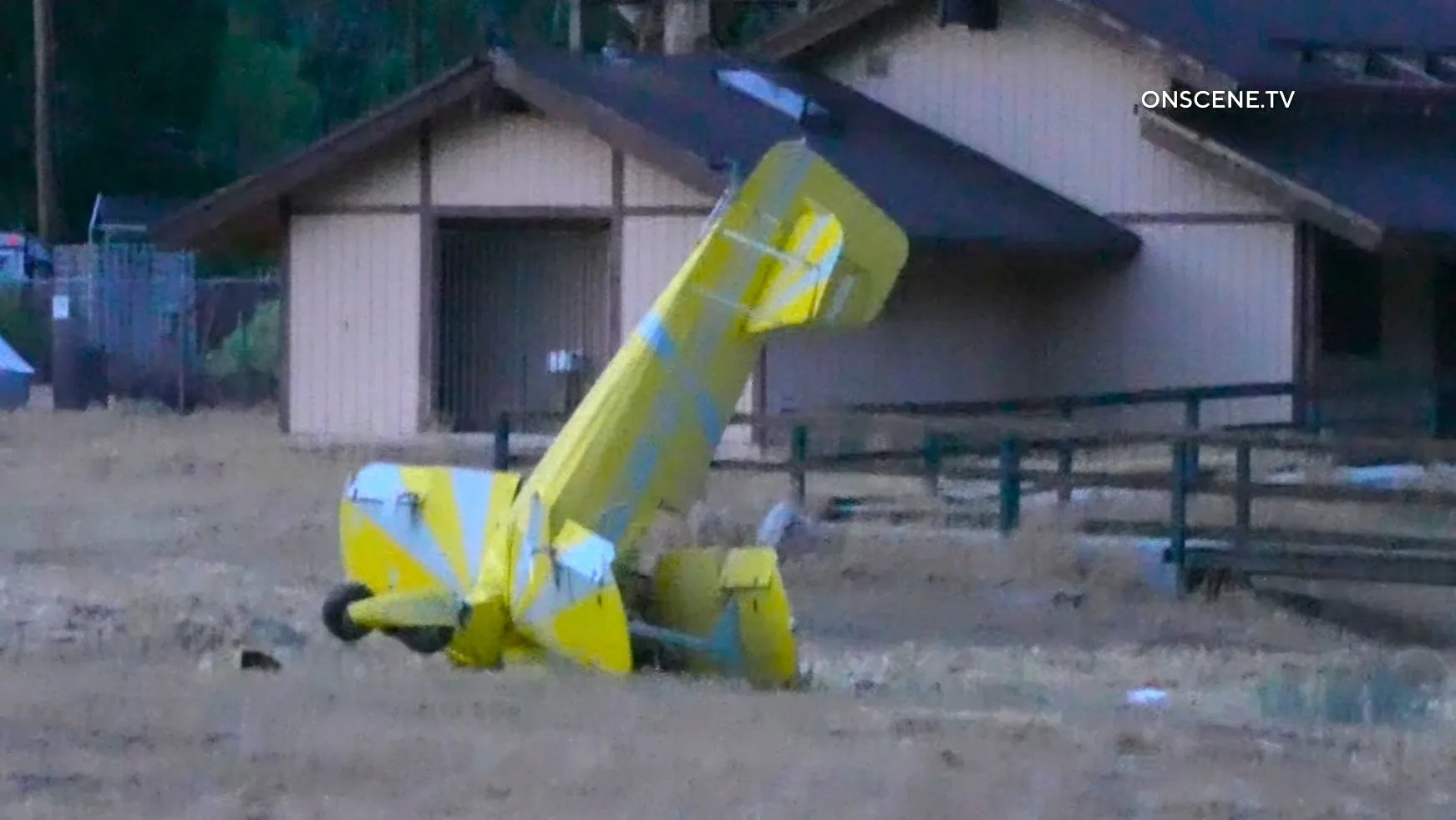
A pilot suffered serious injuries Thursday evening, Aug. 27, 2026, when his experimental airplane stalled and crashed in a field east of Big Bear Airport, authorities said. The crash is a stark reminder of the demanding conditions pilots face at Big Bear Airport, whose high elevation means thin air can rob engines and wings of performance, especially during the warm summer months.[1]
San Bernardino County sheriff's deputies responded to the scene around 6:20 p.m. and found the yellow plane nose-down in the field with only the pilot aboard. No one else was hurt, and no ground damage beyond the aircraft itself was reported.[1]
What happened
According to the Federal Aviation Administration, the Steen Skybolt departed Big Bear Airport and attempted to return to land when the engine stalled. The plane tipped over onto its nose as it came down in the field east of the runway.[1]
The pilot was airlifted to a hospital by helicopter. As of early Friday afternoon, Aug. 28, his name and condition had not been publicly disclosed.[1]
The Skybolt is an experimental homebuilt biplane design — a category that the FAA certifies for airworthiness but that falls outside the standard certified-aircraft regulatory regime. FAA records show this particular aircraft received its airworthiness certificate in 2004. It is registered to a resident of Mohave Valley, Arizona.[1]
The density-altitude factor
Big Bear Airport's high elevation makes it one of the more challenging general aviation airports in Southern California. On hot summer afternoons, a phenomenon called "density altitude" causes the air to behave as if the airport were even higher — reducing both engine power output and the lift generated by wings. Pilots flying in or out of Big Bear must carefully calculate their aircraft's performance margins, particularly during departure and the critical return-to-land phase, when options are limited if something goes wrong.
Experimental aircraft like the Steen Skybolt are built and often modified by their owners, and performance margins can vary significantly from one example to another. The investigation will likely examine whether density-altitude conditions on Thursday evening played a role in the stall.
The FAA has not released further details about weather or atmospheric conditions at the time of the crash. A perspective from Big Bear Airport operations on the specific hazards pilots face there was not available at the time of publication.
Investigation
The National Transportation Safety Board is leading the investigation into the crash.[1] The NTSB typically takes 12 to 24 months to complete a full accident report, though preliminary findings are often published within a few weeks. The pilot and the aircraft's owner have not yet been publicly identified, and no cause has been determined.
The NTSB's preliminary report, once released, will be publicly searchable at ntsb.gov (opens in a new tab).
Sources (1)
- 1.San Bernardino Sun
A pilot suffered serious injuries on Thursday, Aug. 27, when his airplane stalled and crashed in a field east of Big Bear Airport, authorities said.
Open original (opens in a new tab)
Report a problem
See a factual error? Tell us — we review every report before changing the story.
Tomorrow in Big Bear
- Next event: Young Adults Group · 7:00 p.m.
- Sunrise: 6:56 a.m.
- Next edition 7 AM